
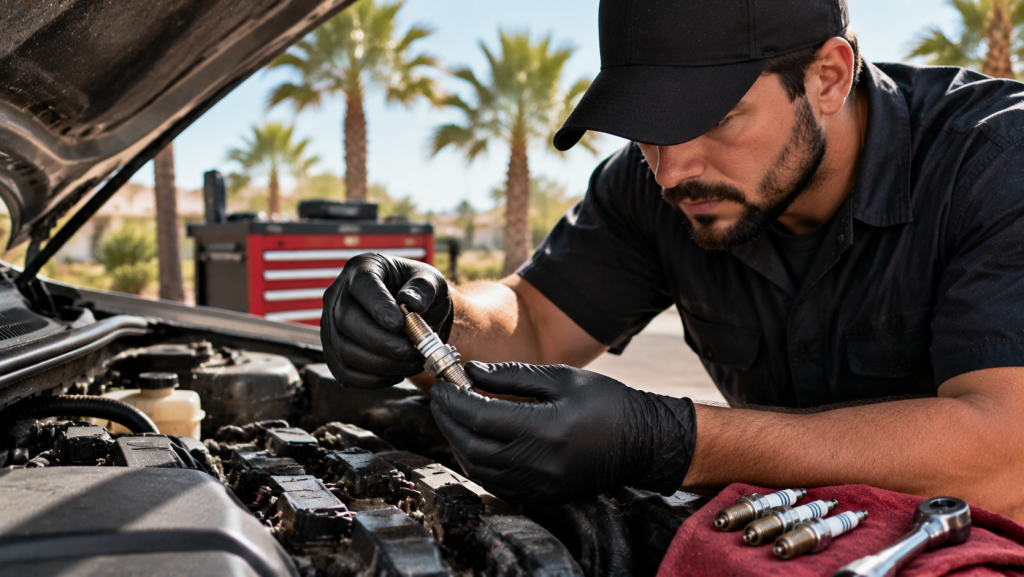
Most drivers think of sun damage as a faded dashboard or a cracked paint finish. The parts under the hood take a beating from the desert as well, and they are easy to forget because you rarely see them. Belts and hoses are made from rubber, and rubber does not age well in the heat of Tucson. Over months and years of high temperatures, intense sun and dry air, these parts can harden, crack and fail. This guide explains how the desert climate affects rubber under the hood, what warning signs to look for, how to do a simple visual check, which signs mean you should stop driving and how a mobile mechanic in Tucson can inspect your belts and hoses at home.
What Belts and Hoses Do
Your engine depends on a collection of rubber parts that work quietly in the background.
- Drive belts. These turn components such as the alternator, the water pump, the power steering pump and the air conditioning compressor. Many modern cars use a single serpentine belt for several of these jobs.
- Radiator hoses. These carry coolant between the engine and the radiator.
- Heater hoses. These carry coolant to the heater core, which provides cabin heat.
- Other hoses and lines. Vacuum lines, air intake hoses, and fuel and power steering lines also use rubber or similar materials.
When any of these fail, the result can range from a noisy annoyance to a car that overheats or stops running. Because they work together, one weak part can leave you stranded even when the rest of the engine is fine.
How Desert Heat Wears Out Rubber
Rubber is flexible when it is new. Heat, sunlight and time slowly change that. In Tucson, several factors work together.
- High ambient temperatures. Long, hot summers keep everything under the hood warm, even when the engine is off. A parked car in the sun can have an engine bay that gets much hotter than the air outside.
- Engine heat. Hoses and belts already live near hot engine parts, and desert heat adds to that load.
- Dry air. Low humidity lets rubber lose its natural oils and flexibility over time.
- Sunlight and ozone. Ultraviolet light and ozone attack rubber and can cause surface cracking, especially on parts that are exposed.
- Temperature swings. Hot days and cooler nights make parts expand and contract repeatedly, which stresses aging rubber.
- Dust. Fine desert dust can work its way into belts and pulleys and add wear.
The result is rubber that gets stiff, brittle or soft and swollen, and that eventually cracks or leaks. Because the changes happen slowly, many people do not notice until something fails. Heat also affects other parts of your car, which is covered in our post on getting your car ready for sudden storms during Tucson monsoon season.
Warning Signs of a Worn Belt
- Squealing or chirping, especially at startup or when you turn the wheel or switch on the AC.
- Visible cracks across the ribs on the underside of the belt.
- Fraying edges or loose threads.
- Glazing, where the belt looks shiny and smooth instead of matte.
- Missing chunks or ribs that have split away.
- Battery or temperature warning lights, since a slipping or broken belt can stop the alternator or water pump.
- Loss of power steering or air conditioning, which can come from a belt that has failed or is slipping.
Warning Signs of a Worn Hose
- Cracks or splits in the rubber surface.
- Bulges or swollen spots, which can show a weak area.
- A soft or spongy feel when the engine is cool and you gently squeeze the hose.
- A hard, brittle feel that does not flex.
- Leaks or stains near the hose ends and clamps, such as dried coolant residue or puddles under the car.
- A sweet smell after driving, which can come from leaking coolant.
- Low coolant that keeps needing a top off.
- A rising temperature gauge or steam from under the hood.
A Simple Visual Check
You can look over your belts and hoses in a few minutes. Do it only when the engine is off and fully cool, because engine parts and coolant can cause burns.
- Park on level ground and let the engine cool.
- Open the hood and find the belt or belts at the front or side of the engine.
- Look at the belt surface. Check for cracks, fraying, glazing and missing pieces.
- Look at the major hoses. Follow the large hoses from the radiator to the engine and look for cracks, bulges and stains.
- Check the clamps and connections for dried residue or looseness.
- Look under the car for fresh spots after it has been parked.
- Check the coolant level in the reservoir when the engine is cold, and never open the radiator cap on a hot engine.
- Keep your hands and clothing away from moving parts. Never touch belts or fans while the engine is running.
Your owner’s manual shows where parts are located and what fluids to use. If something looks wrong, or you are not sure what you are seeing, a technician can take a closer look.
Why Waiting Can Be a Problem
A worn belt or hose may not show an obvious symptom until it fails, and in Tucson the consequences are bigger because of the heat. A broken serpentine belt can stop the alternator, the water pump and the power steering at once, and the engine can overheat quickly. A burst coolant hose can empty the cooling system in moments. Driving on a hot engine can cause serious damage. Being stranded in the summer heat is also a safety concern in itself. That is why inspecting these parts before they fail is worth the effort.
Stop Driving If You Notice
- A temperature warning light or a gauge climbing toward the hot end.
- Steam coming from under the hood.
- A battery warning light, which can mean the belt has stopped driving the alternator.
- A sudden loss of power steering, which makes the wheel feel heavy.
- A strong sweet smell or visible coolant leaking under the car.
- A loud squeal or flapping noise from the engine bay.
Pull over in a safe place as soon as you can, shut the engine off and get help. Do not open the radiator cap on a hot engine, and do not keep driving on an overheated engine. Your owner’s manual explains what each warning light means for your vehicle.
Ways to Protect Rubber Parts
- Have belts and hoses inspected regularly. Follow your owner’s manual for the service schedule, and ask a technician to look at them at routine visits.
- Park in the shade or in a garage when you can, since it reduces heat and sun exposure.
- Use a windshield sunshade to help keep the cabin cooler. It does not protect the engine bay directly, but it reduces overall heat load.
- Keep the cooling system in good shape. Fresh coolant and the right mix, as listed in your owner’s manual, help hoses and other parts last.
- Fix small leaks early. Leaks can weaken nearby rubber parts and lead to bigger problems.
- Keep the engine bay reasonably clean. Oil and some chemicals can soften rubber and speed up wear.
- Replace parts that look worn, instead of waiting for the next failure.
Get Ready Before Monsoon Season
A belt or hose that is already weak can fail during a hot, humid monsoon stretch, when you may be stuck on a flooded road or in heavy traffic. Review our monsoon season car prep guide to see what else to check before the storms arrive, including wipers, tires and lights. Doing this early gives you time to fix problems before the weather turns.
How a Mobile Mechanic Can Help
A mobile mechanic can come to your home or workplace in Tucson and inspect your belts, hoses, clamps and coolant level. A technician can tell you which parts look healthy and which are showing signs of age, and can replace many of them on site. That is convenient in a climate where sitting in a waiting room or driving a car that may be overheating is not appealing. Some jobs, such as certain cooling system repairs or work that needs a lift, may need a shop, and a good technician will tell you honestly which situation applies. If you have been hearing a squeal, noticing a sweet smell or seeing cracks, a quick inspection can give you an answer.
Quick Summary
- Heat, sun, dry air and temperature swings wear out rubber belts and hoses.
- Look for cracks, glazing, fraying, bulges, soft spots, leaks and squealing.
- Inspect with the engine off and cool, and never open the radiator cap when it is hot.
- A failed belt or hose can lead to overheating quickly, so do not ignore the signs.
- Stop driving for temperature warnings, steam, a battery light or sudden loss of power steering.
- A mobile inspection can find worn parts before they fail.
A quick look under the hood can save you from a breakdown in the middle of a Tucson summer. If you would like help, visit the Mobile Mechanic Pros of Tucson homepage to learn more, or contact us to schedule an inspection.