
Tucson spends months under relentlessly dry desert heat, and then monsoon season arrives, typically from late June through September, flipping that pattern entirely with sudden, intense storms that can dump more rain in an hour than the city sees during weeks of ordinary summer weather. This dramatic shift from bone dry conditions to genuine downpours creates a very specific set of hazards for local drivers, testing wipers, tires, and brakes in ways that months of dry heat never do.
Why The First Monsoon Storms Are Often The Most Dangerous
Months of dry desert heat allow oil, dust, and rubber residue to build up steadily on Tucson’s roadways, and this accumulation reaches its peak right before monsoon season begins. When the first significant rain finally arrives, this buildup mixes with water to create an unusually slick surface, considerably more hazardous than the pavement conditions during a routine rain event later in the season once this residue has been washed away. This is exactly why the first monsoon storm of the year tends to see more weather related accidents than storms that follow later in the season, and why tire and brake readiness matters most before that first storm ever arrives.
This phenomenon is well documented by local traffic safety data every year, with a noticeable spike in weather related incidents concentrated specifically around the first heavy rain of the season rather than spread evenly across the entire monsoon period. Understanding that this initial storm carries disproportionate risk, rather than assuming all monsoon rain events are equally hazardous, helps put the timing of a pre season vehicle check into proper context.
Why Wipers Matter More In Tucson Than A Steadily Rainy Climate
Wiper blades degrade under the same intense desert sun and heat that defines a Tucson summer, often becoming dried out, cracked, or warped from months of UV exposure with little rain to ever test them. This means many Tucson vehicles arrive at the start of monsoon season with wipers that have quietly deteriorated all summer without anyone noticing, since there has been no rain to reveal the problem. The first monsoon downpour, often intense and accompanied by reduced visibility, is a particularly bad moment to discover that your wipers can no longer clear the windshield effectively.
How Sudden Storms Test Tires After Months Of Heat Exposure
Tucson’s intense summer heat causes tire rubber to dry out and lose flexibility, sometimes developing small cracks in the sidewall that a driver might not notice during months of dry driving. Once monsoon rains arrive, this degraded rubber has less grip available exactly when wet, sometimes flooded roads demand more traction than dry pavement ever did. Tire pressure also matters considerably here, since a tire that has been managing fine on dry roads all summer may reveal inadequate tread or structural weakness once genuine wet weather traction becomes the test.
Why Brakes Face Their Own Version Of This Seasonal Shift
Brakes that have performed adequately through months of dry, dusty conditions can behave differently once monsoon rains introduce wet pavement and the residue buildup already covering Tucson roads. Reduced initial bite on wet, oily pavement during that first storm of the season is a real phenomenon, and brakes already showing signs of wear from a long dry summer have even less margin to work with once this seasonal shift arrives.
Flash Flooding And Wash Crossings Deserve Special Caution
Tucson’s washes and low water crossings can transform from completely dry to dangerously flooded within minutes once a monsoon storm moves through the area, and this rapid onset flooding is one of the most serious hazards local drivers face during this season. Never attempting to cross a flooded wash, regardless of how shallow the water might appear, is essential, since Tucson’s flash floods carry surprising force and depth can be deceptive from a driver’s seat. If your vehicle has been through standing water during a monsoon event, it is worth having it inspected before assuming everything is fine, since water intrusion can affect electrical connections in ways that are not always immediately obvious. Our guide on the top 10 reasons your car won’t start and how to get back on the road covers a range of causes worth ruling out after this kind of exposure.
Arizona’s stupid motorist law reflects just how seriously this hazard is taken locally, allowing authorities to bill drivers for rescue costs if they ignore barricades and drive around a flooded wash crossing. Beyond the legal and financial risk, the physical danger is real and well documented, with wash related incidents accounting for a meaningful share of monsoon season emergencies each year. Respecting road closures during active flooding is simply the safest choice, regardless of how urgent a trip might feel in the moment.
What To Check Before Monsoon Season Arrives
Inspecting wiper blades for cracking or reduced effectiveness, checking tire tread depth and sidewall condition for signs of heat related dry rot, and having brakes checked for wear accumulated over a long, dusty summer are the three priorities that matter most heading into Tucson’s monsoon season. Catching a degraded component during this proactive check, before the first major storm arrives, is considerably safer and more affordable than discovering the same issue during an actual downpour with reduced visibility and slick roads.
Timing this check for late spring or early June, before the season’s typical arrival, gives you a comfortable window to address any issues without the pressure of an approaching storm already on the forecast. Waiting until monsoon season has technically begun before starting this checklist often means rushing through it right as the first storms are already forming, which defeats much of the purpose of doing it proactively in the first place.
Why A Mobile Mechanic Fits Tucson’s Monsoon Timing Well
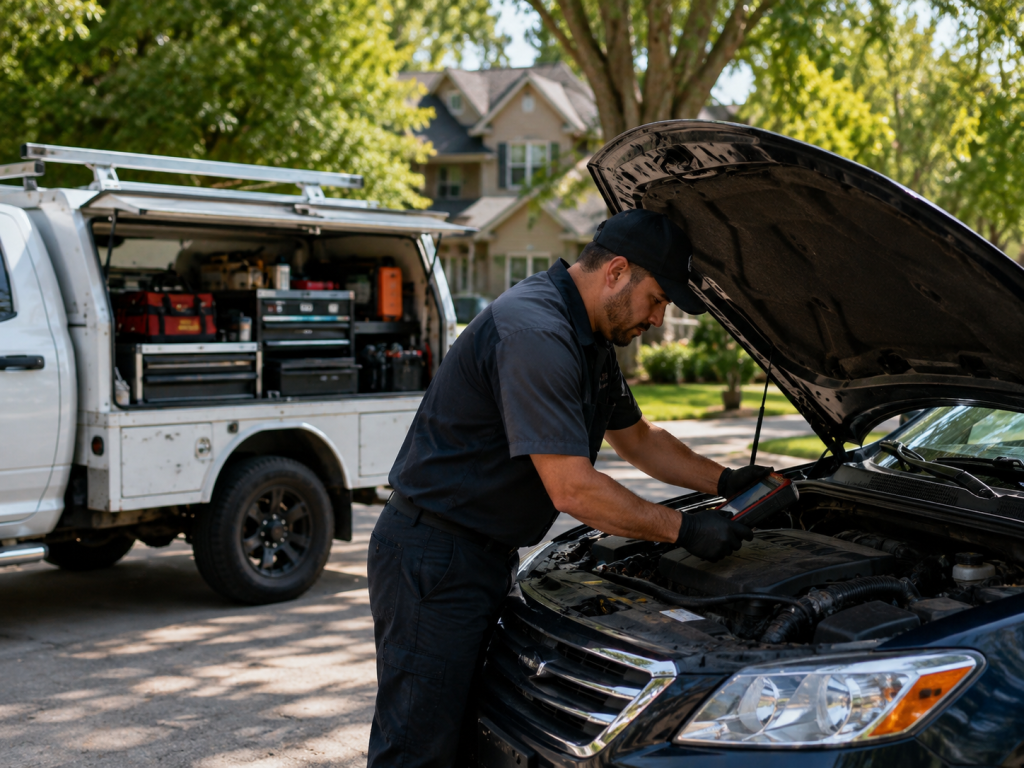
Given how predictable monsoon season’s arrival is each year, even though individual storms remain unpredictable, having a technician check wipers, tires, and brakes proactively in the weeks before the season typically begins is more practical than waiting for a shop appointment that might not align with the timing of an approaching storm. A mobile mechanic can come to your home or workplace and address all three priorities in a single visit.
We covered the broader advantages of this approach in our article on why mobile mechanics are better than traditional auto shops in Tucson, which explains how convenience and quick response times come together, particularly valuable heading into a season when weather can shift from clear to hazardous within a single afternoon.
Get Ahead Of Tucson’s Monsoon Season
The dramatic shift from months of dry desert heat to sudden, intense monsoon storms tests wipers, tires, and brakes in ways that Tucson’s otherwise dry climate never does. Checking these three systems proactively before the season’s first major storm is one of the most effective ways to stay safe once the rain finally arrives, particularly given how much more hazardous that very first storm tends to be compared to the ones that follow.
If it has been a while since your vehicle had a proper checkup, visit our homepage to learn more about our services, or reach out through our contact us page to schedule a visit at your home or office anywhere in the Tucson area.
A little proactive attention now can help your car handle everything Tucson’s monsoon season is about to bring, from that first slick storm to whatever follows through September.