
Monsoon season in Tucson arrives with very little warning. A bright, hot afternoon can turn into a wall of dust, a sky full of lightning, and a downpour that floods streets in minutes. After months of dry heat, your car is not always ready for it. Wiper blades baked by the sun smear instead of clear, tires lose grip on slick pavement, weak batteries struggle, and drivers face blinding dust and flooded washes. A little preparation before the storms start can make a big difference in how safe and stress free those drives are. This guide explains how to get your car ready for desert monsoon storms, what to check, how to handle dust and flooding, and how a mobile mechanic can take care of things like wiper replacement in Tucson at your home or workplace.
Why Monsoon Season Is Hard on a Car
Desert summers wear out the very parts you depend on in a storm. Heat bakes rubber, so wipers crack and harden, hoses stiffen, and tires age. Dust clogs filters and coats the glass. Then the rain arrives all at once, mixing with that dust and oil on the road to create a slick film, especially in the first minutes of a storm. Heavy rain reduces visibility and stopping power at the same moment, and flooded roadways add another danger. Cars that are only slightly worn in dry weather can feel unsafe in a downpour, so the items below start with the parts that matter most for traction and visibility.
Step One: Replace Worn Wiper Blades
Wipers are your first line of defense. After a long, hot summer, the rubber edge is often hard, cracked, or warped, and it cannot clear water cleanly. Signs it is time to replace them include:
- Streaking or smearing across the glass
- Chattering, skipping, or squeaking as they move
- Unwiped patches or bands in your line of sight
- Cracks, splits, or peeling in the rubber
- A bent frame, or a blade that does not sit flat on the glass
Blades come in specific sizes for each vehicle, so use your owner’s manual or a parts guide. Do not forget the rear wiper if your car has one. It is a quick job with a big safety benefit, and a technician can often do it in minutes. Run the wipers with washer fluid, not on a dry, dusty windshield, because grit can scratch the glass and wear the rubber.
Step Two: Fill the Washer Fluid and Check the Nozzles
Rain mixed with desert dust leaves a muddy film that wipers alone cannot always clear. Keep the washer reservoir full, and use a fluid made for the purpose. Check that the nozzles spray in the right place, and clear any that are clogged. A clean windshield, inside and out, also cuts glare from headlights and lightning at night.
Step Three: Inspect Your Tires
Tires are your only contact with a wet road. Tread channels water out from under the tire, and as the tread wears down, the risk of hydroplaning goes up. Check:
- Tread depth, since worn tires lose wet grip quickly
- Pressure on all four tires, and the spare, when cold
- Sidewalls for cracks, bulges, or cuts caused by heat and age
- Uneven wear, which can point to alignment or suspension trouble
- The age of the tires, because rubber hardens over time even when the tread looks fine
Use the pressure on the label inside the driver’s door jamb or in your owner’s manual, not the number printed on the tire. Hot pavement and old rubber are a tough mix, so replace tires that are worn or aged before the storms arrive.
Step Four: Check the Brakes
Wet roads increase stopping distances, so you want your brakes in good shape. Listen for squealing or grinding, and notice a soft pedal, pulling to one side, or vibration when stopping. Brakes are a safety system, so any of these deserves an inspection. Our article on monsoon season in Tucson and getting your car ready for sudden storms covers more of what these storms mean for your vehicle, and brakes are one of the first things to show a weakness.
Step Five: Test the Lights
Storms turn day into dusk, and dust and spray make it hard for others to see you. Check the headlights, brake lights, turn signals, and hazard lights. Clean the lenses, and replace any bulb that is dim or burned out. Sun damaged headlight lenses can turn yellow and cloudy, which reduces output, so they deserve attention. Turn on your headlights in rain or dust so your taillights come on as well, and follow local rules and your owner’s manual.
Step Six: Test the Battery
Desert heat is hard on batteries, and a battery weakened by summer may show it when you need wipers, lights, defrosters, and the air conditioning all at once. Signs of trouble include slow cranking, dim lights, a battery warning light, corrosion on the terminals, and an age of several years. A quick test can show how much life is left. If your car will not start, our guide to the top 10 reasons your car won’t start and how to get back on the road goes through the common causes.
Step Seven: Check the Cooling System and Belts
The cooling system works hard all summer, and storms bring stop and go traffic and standing water on the road. Look at the coolant level when the engine is cool, and inspect the belts and hoses for cracks, fraying, bulges, or soft spots. A failed belt or hose can strand you in the worst weather. If the temperature gauge runs higher than normal, have the system checked.
Step Eight: Look at the Air Filter and Cabin Filter
Monsoon season often brings dust storms first, which can clog the engine air filter and the cabin air filter. A clogged engine filter can reduce performance, and a dirty cabin filter weakens airflow, which makes fogged windows harder to clear. Check both, and replace them according to your owner’s manual, and sooner if you drive in dusty conditions.
Step Nine: Make Sure the Defroster and Air Conditioning Work
Humid storm air fogs glass quickly. The defroster and the air conditioning work together to clear moisture from the windows, so test the front and rear defrosters and check that air flows well from the vents. Weak airflow or a musty smell can point to a clogged cabin filter or an air conditioning issue.
Step Ten: Check the Seals and Drains
Water finds any gap. Look at the door, window, and sunroof seals for cracks or shrinking caused by heat. A damp carpet or musty smell can mean a leak. Many cars have drain channels around the sunroof and the base of the windshield, and dust and leaves can clog them, which can send water into the cabin or electrical parts. Clear what you can reach, and have a technician help find the source of any leak.
Step Eleven: Pack an Emergency Kit
- A flashlight with fresh batteries
- Jumper cables or a portable jump starter
- A phone charger and a charged phone
- Plenty of water, since desert heat returns quickly after a storm
- Snacks that will not spoil
- A towel, a rain jacket, and a blanket
- Reflective triangles or flares
- A tire pressure gauge, a basic tool kit, and the spare tire tools
- A basic first aid kit
How to Drive in a Monsoon Storm
A prepared car still needs a careful driver. Slow down, turn on your headlights, and leave much more space between you and the car ahead. Avoid sudden braking or steering, and ease off the gas if the car feels like it is floating. The first minutes of rain are often the slickest, as water lifts oil and dust from the pavement. Be alert for sudden gusts, and keep a firm grip on the wheel. If visibility drops so low that you cannot drive safely, find a safe place to stop and wait it out.
What to Do in a Dust Storm
Dust storms can reduce visibility to almost nothing in seconds. If you see one coming, check your surroundings and slow down early, and if possible exit the roadway at a safe place. Local safety agencies advise drivers who must stop to pull off the road as far as possible, stop in a place away from traffic, turn off the lights, and keep their foot off the brake, so that other drivers do not follow your lights into your car. Follow current guidance from local authorities, wait for the dust to pass, and do not stop in a travel lane. Keep windows and vents closed to reduce the dust that comes inside.
Never Drive Through Flooded Roads
Desert washes and low spots can fill quickly, and even shallow, fast moving water can sweep a vehicle away. It takes far less water than most people think to float a car. If a road is covered with water, turn around and find another route. Do not try to judge the depth by looking, because the road underneath may be damaged or gone. Water can also stall an engine and cause serious damage. If your car has been in deep water, do not try to restart it, and have it inspected before driving. Following the posted warnings and local alerts keeps you and your car safe.
A Quick Monsoon Checklist
- Wiper blades replaced if they streak, skip, or crack
- Washer fluid full, with clear nozzles
- Tires with good tread, correct pressure, and no damage
- Brakes quiet and responsive
- All lights working, with clear lenses
- Battery tested and terminals clean
- Cooling system, belts, and hoses in good shape
- Air filter and cabin filter checked
- Defroster and air conditioning working
- Seals intact and drains clear
- Emergency kit stocked
Can a Mobile Mechanic Help With Monsoon Prep?
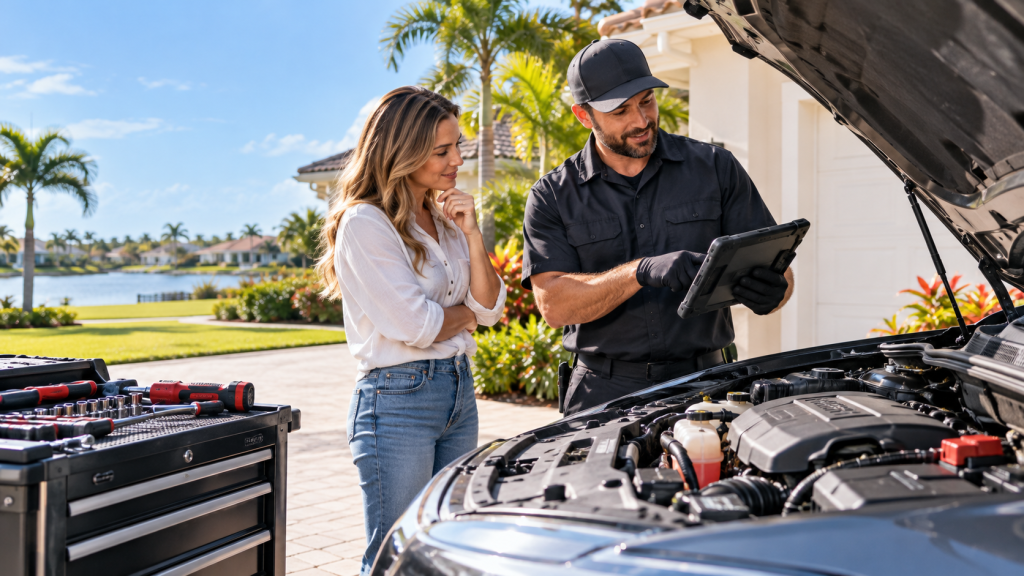
In many cases, yes. A mobile mechanic can come to your home or workplace in the Tucson area, replace wiper blades, test the battery and charging system, and inspect the tires, brakes, belts, hoses, lights, filters, and fluids. That means you can get ready for storm season without sitting in a shop in the heat. Some jobs, such as tire mounting that needs a machine, major brake work, or repairs that need a lift or specialized equipment, may need a full shop, and a trustworthy technician will tell you honestly when that is the case. When you book, share your vehicle’s year, make, model, and mileage, and mention anything you have noticed, such as streaking wipers, slow starts, or a weak air conditioner.
Get Ready Before the First Storm
Monsoon storms do not wait for a convenient time. A fresh set of wipers, good tires, solid brakes, and a healthy battery let you meet them with confidence. If you have not looked at your car lately, now is the time to have it checked.
To learn more about our services, visit our homepage. If you would like your car ready for monsoon season, reach out through our contact us page and we will come to you anywhere in the Tucson area.