
Can a Broken Belt Damage My Engine in Tucson, AZ?
Engine belts play an important role in keeping your vehicle operating properly. These belts transfer power from the engine to critical components such as the alternator, water pump, power steering pump, and air conditioning compressor. When one of these belts breaks, the systems it powers may stop working almost immediately.
Many drivers wonder whether a broken belt can actually damage the engine itself. In some situations, the answer is yes. While some belt failures mainly affect accessory systems, others can lead to serious internal engine damage if the problem is not addressed quickly.
Understanding how engine belts work and what happens when they fail can help drivers recognize early warning signs and avoid costly repairs. If your vehicle develops belt problems while driving in Tucson, AZ, a Mobile Mechanic in Tucson, AZ can inspect the issue and perform repairs at your location
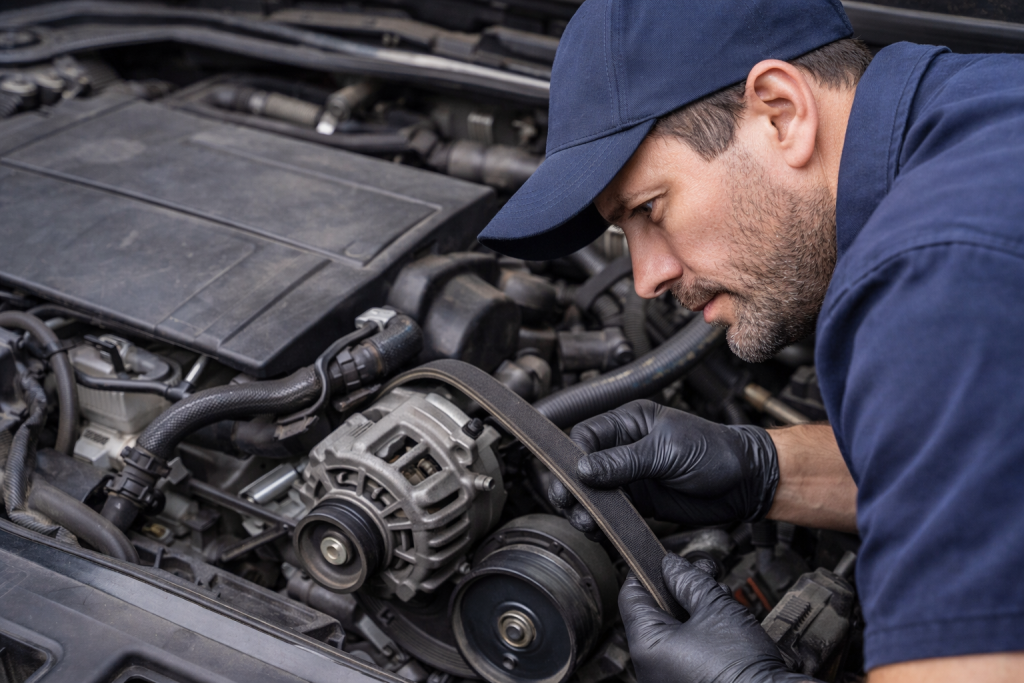
What Engine Belts Do in Your Vehicle
Engine belts are responsible for transferring power from the crankshaft to several accessories that help your vehicle function properly. Most modern vehicles use a serpentine belt system that powers multiple components at once.
These systems commonly include:
- Alternator
- Power steering pump
- Water pump
- Air conditioning compressor
- Cooling system components
Because one belt operates several accessories, a failure can affect multiple vehicle systems at the same time.
Some vehicles also use a timing belt, which synchronizes the movement of the crankshaft and camshaft so the engine valves open and close correctly.
Both types of belts play an important role in engine operation.
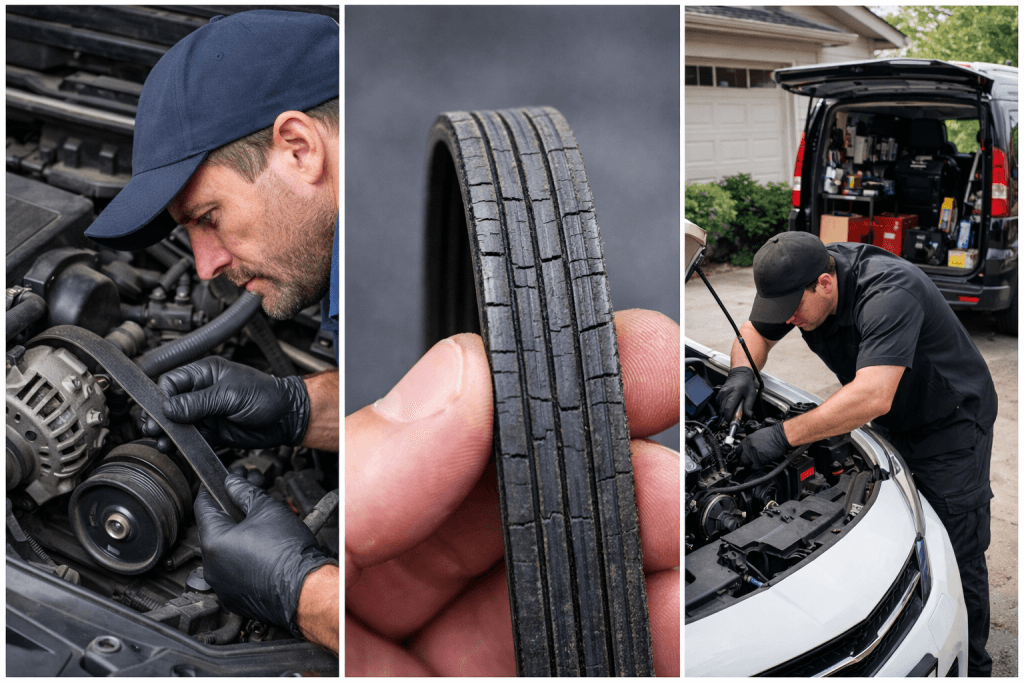
Can a Broken Belt Damage the Engine?
In many cases, a broken belt can lead to engine damage if the vehicle continues running without proper repairs. The level of damage often depends on which belt fails.
Serpentine Belt Failure
When a serpentine belt breaks, several accessory systems stop working immediately.
Drivers may notice:
- Loss of power steering
- Battery charging failure
- Air conditioning failure
- Engine overheating
If the serpentine belt powers the water pump in your vehicle, the engine may overheat quickly. Continued driving while the engine overheats can cause serious engine damage such as warped cylinder heads or blown head gaskets.
Timing Belt Failure
Timing belt failure is typically more serious than serpentine belt failure.
The timing belt controls the movement of the engine’s internal components. If it breaks while the engine is running, the pistons and valves may collide inside the engine.
This type of failure can lead to:
- Bent engine valves
- Damaged pistons
- Cylinder head damage
- Complete engine failure
For this reason, replacing the timing belt at the recommended maintenance interval is extremely important.
Signs Your Engine Belt May Be Failing
Squealing or Chirping Noises
One of the most common warning signs of belt wear is a high-pitched squealing or chirping noise coming from the engine.
This sound often occurs when the belt begins slipping on the pulleys.
Visible Cracks or Fraying
Rubber belts naturally degrade over time. If you inspect the belt and notice cracks, frayed edges, or glazing, the belt may be nearing the end of its lifespan.
Battery Warning Light
If the serpentine belt stops turning the alternator properly, the vehicle may display a battery warning light on the dashboard.
Engine Overheating
If the water pump stops working due to belt failure, the engine temperature may rise quickly.
Overheating should always be taken seriously to prevent engine damage.
Loss of Power Steering
When the serpentine belt slips or breaks, the power steering pump may stop functioning, which can make the steering wheel much harder to turn.
What Happens If You Continue Driving With a Broken Belt?
Continuing to drive after a belt breaks can quickly cause additional damage to the engine.
Possible consequences include:
- Severe engine overheating
- Electrical system failure
- Loss of steering assistance
- Complete engine shutdown
If a timing belt fails, the damage can occur instantly and may require extensive engine repairs.
Drivers should stop driving and arrange for inspection as soon as belt failure is suspected.
How a Mobile Mechanic in Tucson, AZ Can Help
When an engine belt breaks, drivers may not feel comfortable driving their vehicle to a repair shop. A Mobile Mechanic in Tucson, AZ provides a convenient solution by diagnosing and repairing the problem at your location.
Mobile mechanic services may include:
- Serpentine belt replacement
- Timing belt inspections
- Belt tensioner replacement
- Pulley alignment checks
- Cooling system diagnostics
On-site service allows drivers to resolve belt problems quickly without the need for towing or long wait times.
Tips to Prevent Belt Failure
Follow Manufacturer Replacement Intervals
Vehicle manufacturers provide recommended replacement intervals for engine belts in the owner’s manual.
Inspect Belts During Routine Maintenance
Regular inspections can help detect cracks, wear, or glazing before the belt fails.
Repair Fluid Leaks Quickly
Oil or coolant leaks can damage rubber belts and shorten their lifespan.
Replace Belt Tensioners When Necessary
A worn tensioner can cause belts to slip, which increases wear and may lead to belt failure.
Engine belts are essential components that help power several systems in your vehicle. While serpentine belt failure mainly affects accessory systems, timing belt failure can lead to severe internal engine damage.
Recognizing early warning signs such as squealing noises, cracks in the belt, or dashboard warning lights can help drivers address problems before they become serious. Regular inspections and timely belt replacement are key steps in preventing unexpected breakdowns and costly engine repairs.
If your vehicle shows signs of belt wear or failure, scheduling an inspection is the safest option.